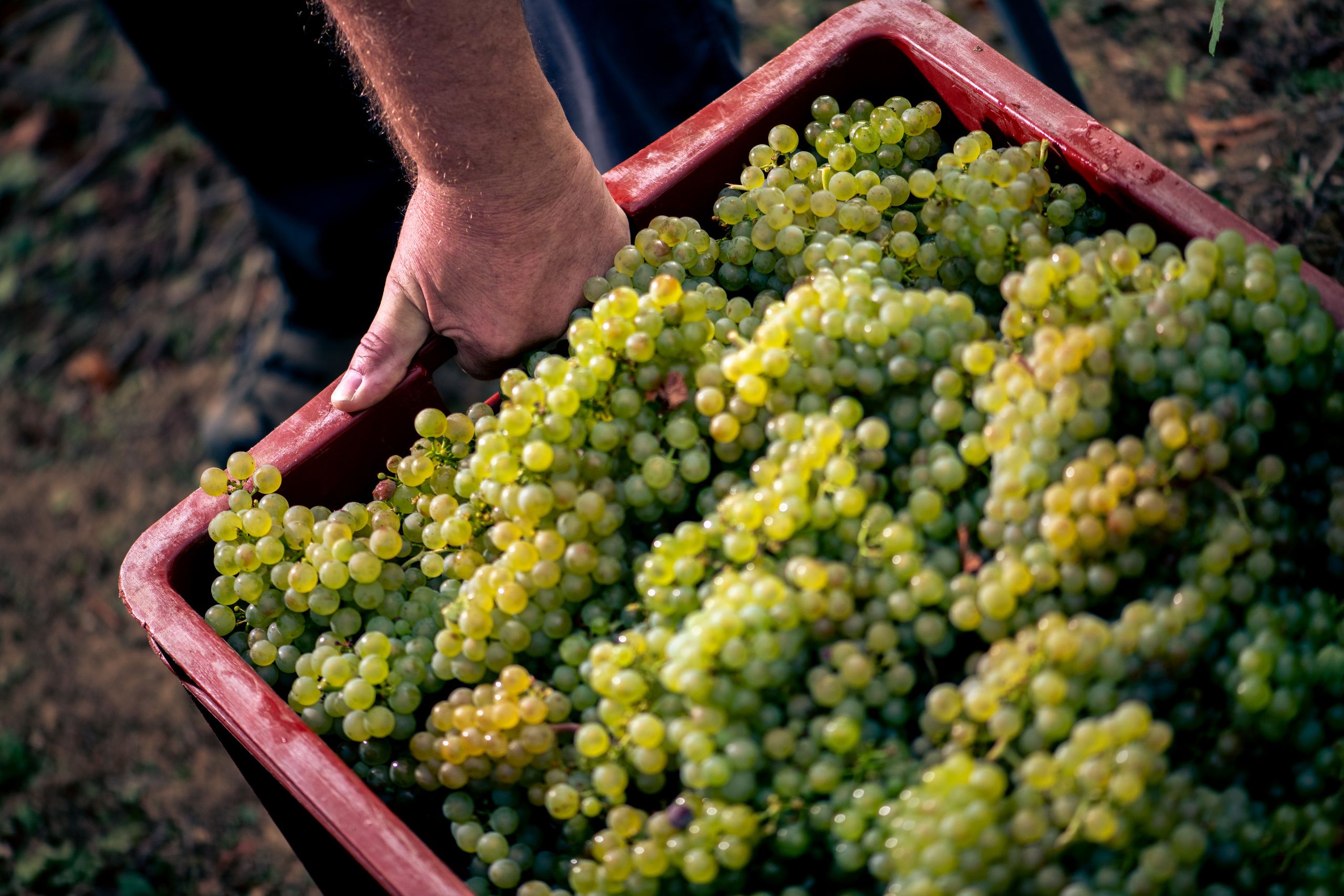
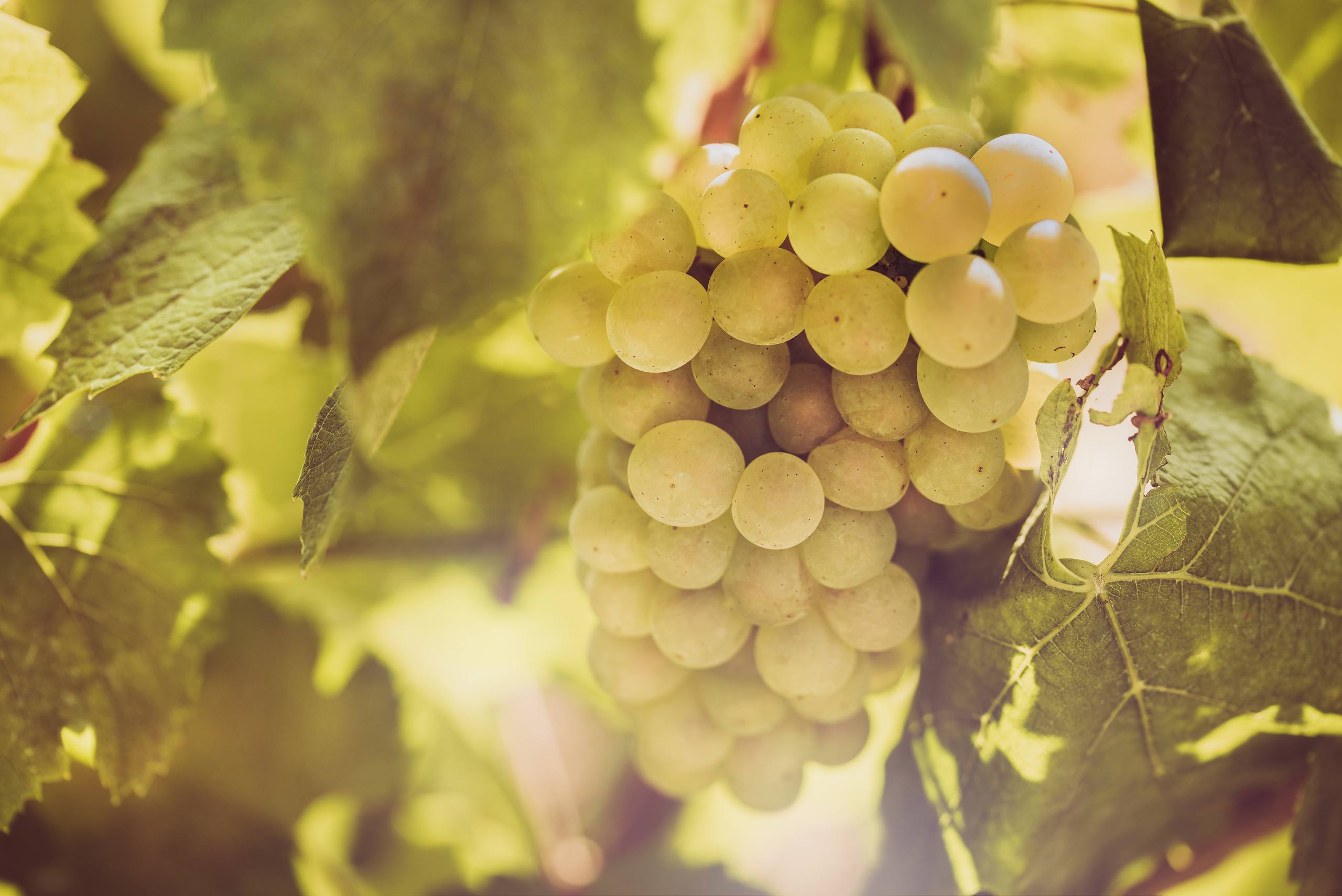
A Blanc de Blancs champagne is a “white” champagne made from “white” grapes. It is therefore the Chardonnay grape that is mainly used to produce this type of champagne in the Champagne region. Representing only a third of the surface area of the Champagne vineyards, these white grapes are therefore less commonly planted than the black grapes (Pinot Noir: 38% / Pinot Meunier: 32%).
Chardonnay is mainly grown in the Côte des Blancs, a limestone terroir that extends for about 20 kilometres south of the town of Epernay. However, it is not the only white grape variety authorised in the production of Blanc de Blancs in the Champagne AOC specifications. In fact, other white grapes, such as Pinot Blanc, Arbane or Petit Meslier, can also be used.
Conversely, Blanc de Noirs is the term used for “white” wines made from “black” grapes.
CHAMPAGNE DE SAINT-GALL and Chardonnay
Historically close to the Côte des Blancs, CHAMPAGNE DE SAINT-GALL produces mainly Blanc de Blancs. The Chardonnay grapes used for these champagnes originate exclusively from villages classified as Premier and Grand Crus.
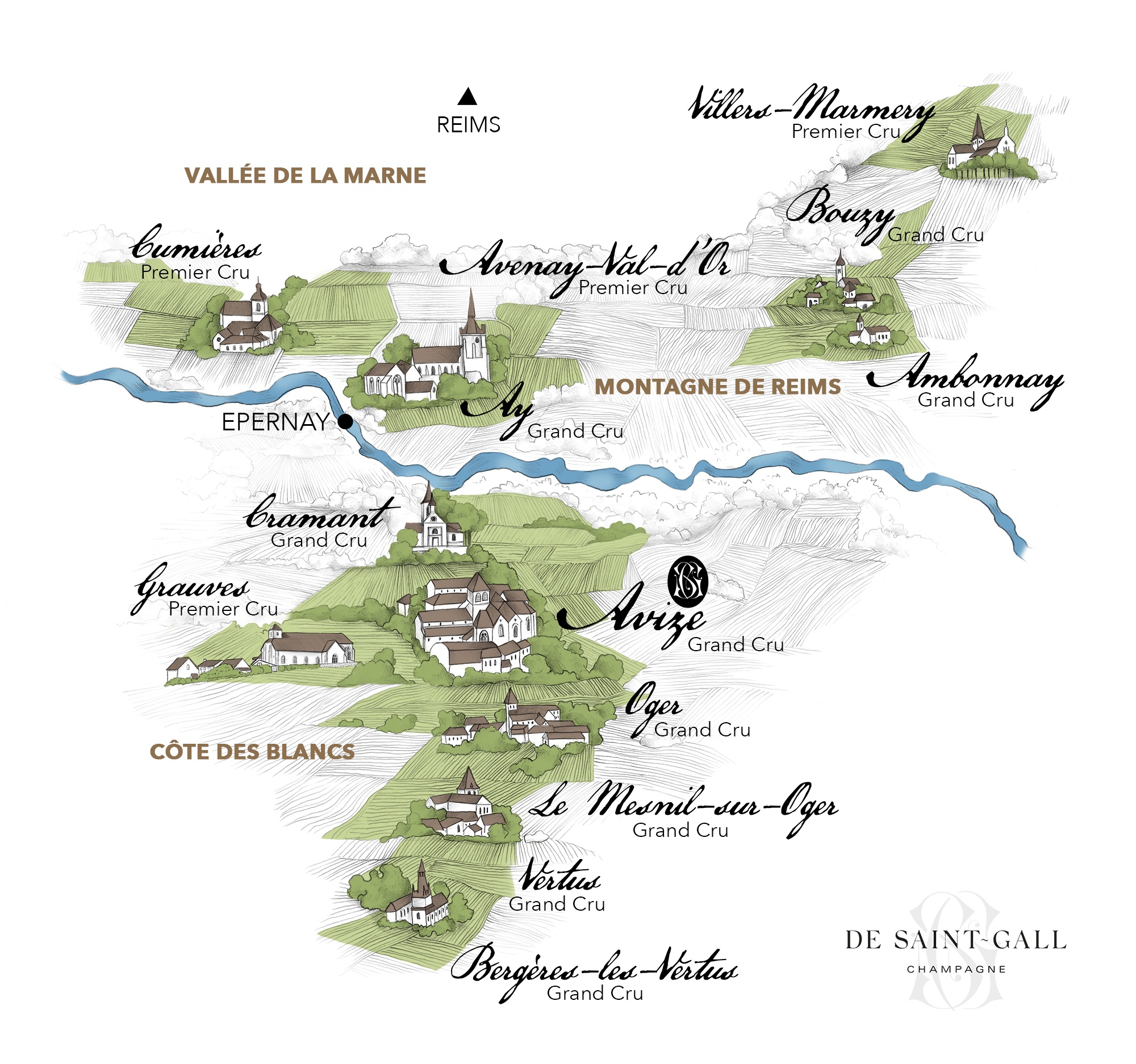
UNION CHAMPAGNE’s vineyards cover about 1,400 hectares, 800 of which are planted with Chardonnay, mainly in the Côte des Blancs, in the villages of Bergères-les-Vertus, Vertus, Le Mesnil-sur-Oger, Oger, Avize and Cramant, as well as in Villers-Marmery in the heart of the Montagne de Reims.
What can you pair a Blanc de Blancs champagne with?
Although traditionally enjoyed as an aperitif, Blanc de Blancs can also be served throughout a meal. Here are some pairing suggestions:
Le Blanc de Blancs Grand Cru Extra Brut
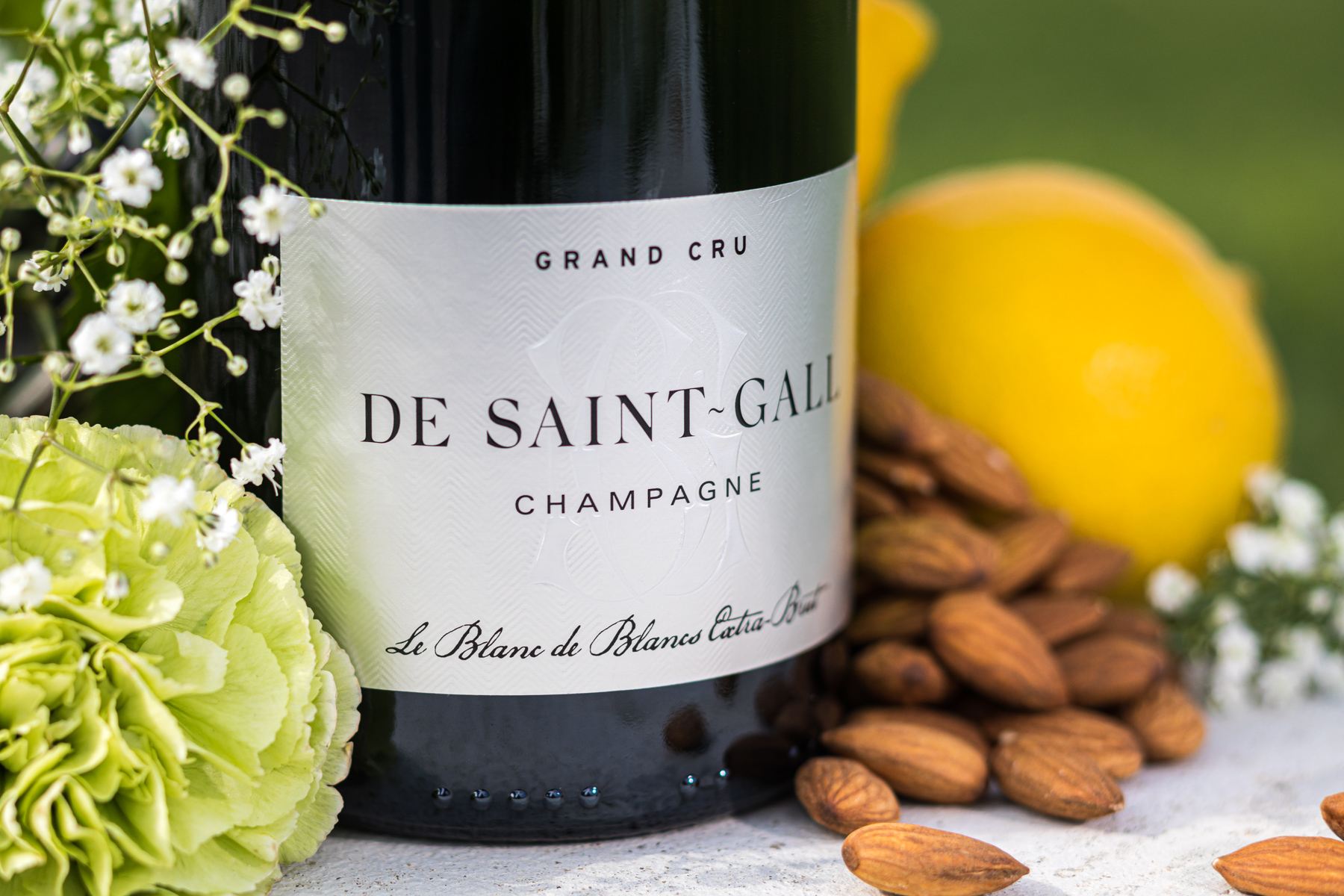
The crafting of this champagne with a very low sugar dosage requires exceptional quality grapes and precise savoir-faire. With its straw yellow hue, citrus nose and energetic, mineral and direct palate, it is the perfect partner with a platter of seafood.
Le Blanc de Blancs Premier Cru
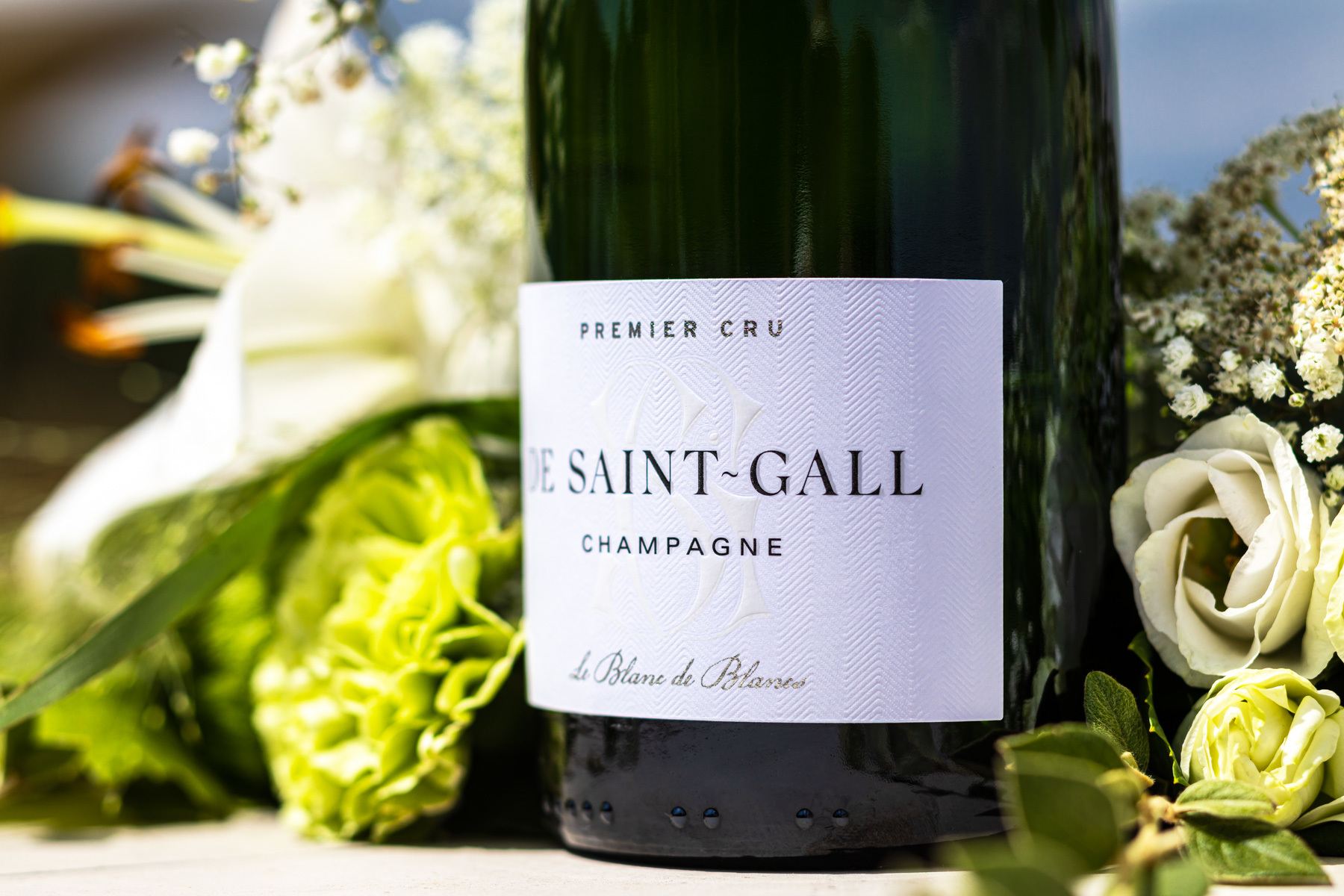
This Champagne discloses a lovely aromatic richness and is one of those bottles of champagne that you always open with great relish. With its lovely pale hue, its nose of white flowers and lime blossom, and its delicate palate, it will work well with fatty fish as well as goat’s cheeses.